Photo: Microsoft Stock Images
A beautiful home often includes carefully selected cleaning supplies, hair products, nail treatments, and skincare tools that rely on chemical ingredients to perform well. While these items support hygiene and self-care routines, they also require proper storage. A safe organization protects health, preserves product effectiveness, and reduces the risk of accidents. Thoughtful storage practices help households balance style with responsibility.
Know What You Are Storing
Household chemicals extend beyond heavy-duty cleaners. Hair dyes, nail polish removers, aerosol sprays, disinfectants, and laundry pods all contain active ingredients that require attention. Reading labels provides critical information about flammability, ventilation needs, and temperature limits.
Products with alcohol or acetone can evaporate quickly and may be flammable. Bleach and ammonia-based cleaners should never mix and must remain sealed in their original containers.
- Keep Products in Original Containers
Original packaging serves a purpose. Manufacturers design containers to prevent leaks, control light exposure, and preserve stability. Transferring products into decorative bottles may look appealing, but it can remove important warning labels and compromise safety.
Clear labeling reduces confusion. If refilling smaller dispensers for convenience, keep the original container nearby and ensure the secondary container includes accurate labeling. Professional chemical packaging services focus on durability and hazard communication, which highlights how critical proper containment is even at the consumer level.
- Choose the Right Storage Location
Heat, moisture, and direct sunlight can break down ingredients and increase pressure inside containers. Bathrooms often experience high humidity, making them less suitable for storing large quantities of cleaning chemicals. Kitchens may also expose products to heat from appliances.
A cool, dry cabinet with good ventilation is typically the safest option. High shelves or locked cabinets help prevent access by children and pets. Flammable products should be kept away from open flames, space heaters, and electrical panels. Separating incompatible chemicals, such as acids and bleach, reduces the chance of harmful reactions.
- Maintain Order and Monitor Expiration
Clutter increases risk. Crowded shelves can lead to spills, cross-contamination, or accidental mixing. Organize products by category, such as hair care treatments in one area and heavy-duty cleaners in another. Keep lids tightly closed and wipe containers if residue builds up.
Expiration dates matter more than many people realize. Old products can lose effectiveness or change in composition. Regularly review stored items and dispose of expired or damaged containers according to local guidelines. Many communities offer designated drop-off locations for hazardous waste.
- Prioritize Accessibility and Emergency Awareness
Emergency information should remain visible. Keep poison control contact details accessible and know basic first aid steps for accidental exposure. Households with children benefit from child-resistant caps and cabinet locks.
Accessibility also means being able to locate items quickly without having to rummage. Clear bins or labeled baskets reduce the need to open multiple containers at once, lowering the risk of spills. Safe storage combines practicality with an organized appearance that complements a well-maintained home.
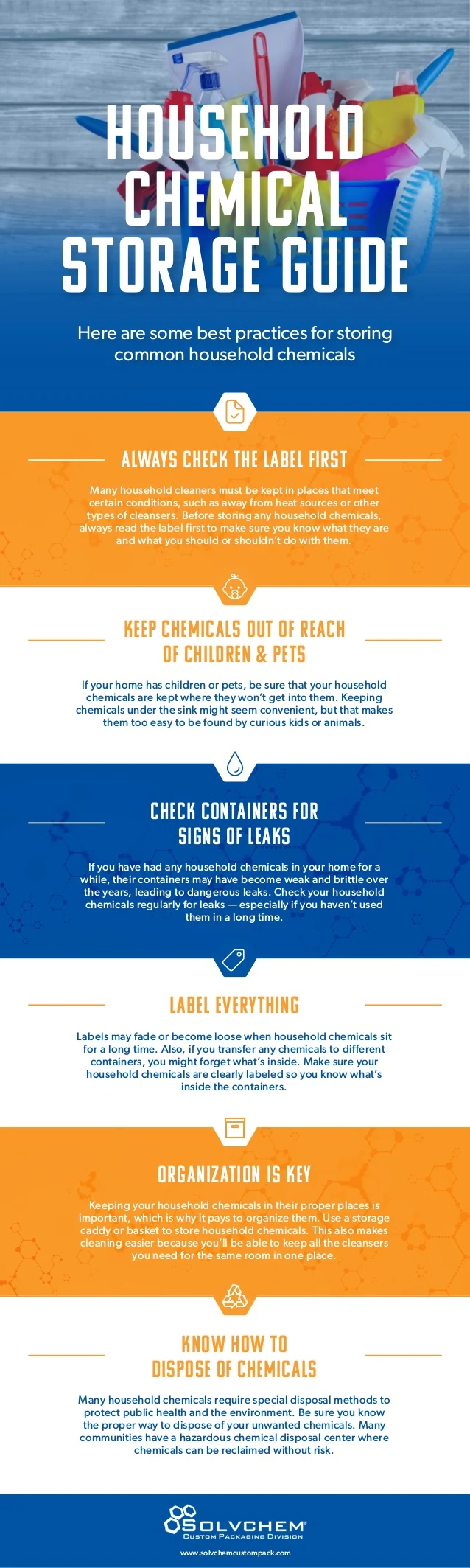
A polished living space reflects thoughtful choices beyond décor and fashion. Responsible storage of household chemicals protects loved ones, maintains product performance, and supports a safer environment. Check out the infographic below for more information.