Photo: Microsoft Stock Images
Swimming offers relaxation, exercise, and social connection. While water quality is essential for safety, the chemicals used to keep pools clean can sometimes affect respiratory health. Knowing how these substances interact with the body helps swimmers make informed choices and enjoy the water with confidence.
What Pool Chemicals Do in the Water
Most pools rely on chlorine or similar disinfectants to control bacteria and algae. These chemicals work by reacting with contaminants introduced by swimmers. When chlorine combines with these substances, it forms byproducts called chloramines, which are responsible for the strong smell often associated with pools.
Chloramines do not stay confined to the water. They can rise into the air just above the pool surface, especially in indoor facilities with limited ventilation. This airborne exposure is often the main factor linked to respiratory irritation.
How Lungs Respond to Chemical Exposure
The lungs are sensitive organs designed to exchange oxygen efficiently. When chloramines or other chemical byproducts are inhaled, they can irritate the lining of the airways. For some people, this leads to coughing, chest tightness, or a burning sensation in the throat.
Women with respiratory conditions may notice symptoms more quickly. Even those without prior lung issues can experience discomfort after extended time in poorly ventilated pool areas. Repeated exposure over time may increase sensitivity, making future reactions more noticeable.
Indoor Pools and Air Quality
Indoor pools present unique challenges for respiratory health. Without adequate air circulation, chemical byproducts can build up above the water surface. Warm water and high swimmer volume increase this effect, raising the concentration of irritants in the air.
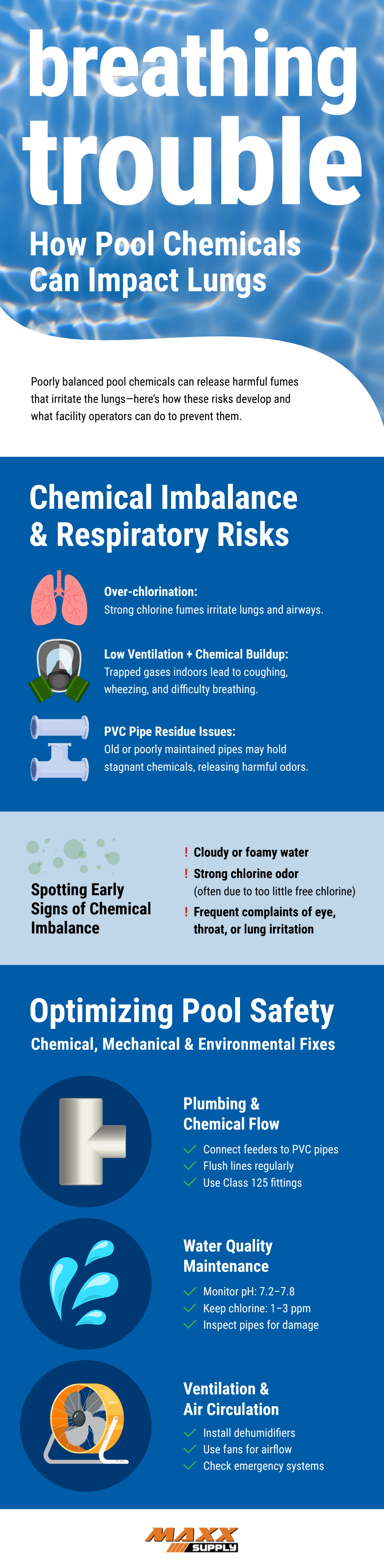
Modern pool systems aim to balance sanitation with airflow. Mechanical components play a role in maintaining stable chemical levels. Infrastructure details such as PVC gate valves help regulate water flow and chemical distribution, supporting overall system control without drawing attention to their presence.
Signs Your Lungs May Be Reacting
Recognizing early signs of irritation allows swimmers to respond before symptoms worsen. Common indicators include persistent coughing after swimming, wheezing, shortness of breath, or unusual fatigue. Eye and skin irritation often occur alongside respiratory discomfort, signaling higher chemical activity.
If symptoms appear consistently after pool use, reducing exposure time or choosing facilities with better ventilation may help. Showering before swimming also lowers the amount of organic material introduced into the water, reducing chemical byproduct formation.
Final Thoughts: Safer Swimming Habits for Respiratory Comfort
Simple habits can lower the chance of lung irritation. Taking breaks from the pool deck, especially during crowded swim times, allows the lungs to recover. Swimming outdoors when possible reduces exposure to concentrated airborne chemicals.
Paying attention to pool maintenance practices also matters. Facilities that monitor chemical balance closely tend to produce fewer irritants. Asking staff about ventilation systems and water testing routines can provide insight into overall air quality.
Choosing well-maintained pools, practicing good swim hygiene, and listening to the body’s signals support healthier experiences in the water. With informed habits, it is possible to enjoy swimming while breathing easily and lungs are comfortable. Look over the infographic below for more information.